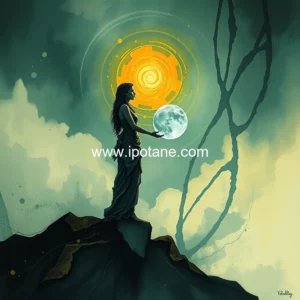
Sasmita’s work is a powerful expression of female empowerment, challenging societal norms and expectations.
The Art of Citra Sasmita
Citra Sasmita’s artistic journey began in the 1990s, when she started creating traditional Indonesian art forms such as Kamasan scrolls and batik.
‘I wanted to challenge the traditional representations of the gods and goddesses, and to give them a more contemporary and feminist perspective.’
The Art of Subversion
Sasmita’s work is a deliberate subversion of traditional Balinese iconography. She takes the familiar images of gods and goddesses and turns them on their head, using bold colors and striking poses to challenge the status quo. The result is a visually striking exhibition that is both thought-provoking and visually stunning. The exhibition features a range of works, including paintings, sculptures, and installations, each one pushing the boundaries of traditional representation. Sasmita’s use of color is particularly noteworthy, with bold and vibrant hues that add an extra layer of depth and meaning to her work. The exhibition also explores the role of women in Balinese society, highlighting the ways in which they have been marginalized and excluded from traditional power structures.
The Artist’s Vision
Sasmita’s vision for the exhibition is clear: to challenge the traditional representations of the gods and goddesses, and to give them a more contemporary and feminist perspective. She is drawn to the stories of the Balinese people, and the ways in which they have been shaped by their cultural and historical context. Sasmita’s work is deeply rooted in her own experiences and observations of Balinese culture. She is particularly interested in the ways in which women’s voices have been silenced and marginalized in traditional Balinese society.
Sasmita is a 2019 exhibition that explores the intersection of art and technology, featuring works by 15 artists from around the world. The exhibition is a collaboration between the Museum of Contemporary Art in Los Angeles and the Museum of Modern Art in New York.
The Intersection of Art and Technology
Sasmita is a groundbreaking exhibition that delves into the fascinating world of art and technology. The exhibition brings together 15 artists from diverse backgrounds and disciplines, showcasing their innovative works that blend traditional art forms with cutting-edge technology. The artists featured in the exhibition are:
- Alessandro Balzo: An Italian artist known for his digital sculptures that explore the relationship between nature and technology. Hannah Starkey: A British artist who uses digital tools to create intricate, hyper-realistic portraits of women. Yayoi Kusama: A Japanese artist famous for her immersive installations that combine art, technology, and nature. Sound Artists:**
- Christina Kubisch: A German sound artist who uses electromagnetic fields to create site-specific sound installations.
However, with the emergence of modern art, the role of women has changed. Sasmita is a collaborative effort between a woman and a man, challenging the traditional norms of the art form.
The Origins of Sasmita
Sasmita is a relatively new art form that has its roots in traditional Balinese Kamasan paintings. The Kamasan style has been practiced since the 15th century, with men traditionally taking on the role of artists and storytellers.
The Art of Kamasan Scrolls
Kamasan scrolls are a unique and ancient form of storytelling that originated in Bali, Indonesia. These intricate, hand-painted scrolls are used to tell stories, myths, and legends of the Hindu and Buddhist traditions.
The Dutch colonial authorities imposed their own style of art on the Bali, suppressing the traditional Balinese art forms. This led to a decline in the traditional art forms and the emergence of a new style of art that was heavily influenced by European art.
The Impact of Dutch Occupation on Balinese Art
The Dutch occupation of Bali in 1908 marked a significant turning point in the history of Balinese art.
The Artist’s Vision
Sasmita’s work is deeply rooted in her Indian heritage, yet her art is not limited to traditional representations. She explores the complexities of identity, culture, and social issues through her vibrant and thought-provoking pieces. Her art is a reflection of her experiences, observations, and emotions, making it relatable and engaging for the viewer. Themes of identity, culture, and social issues are woven throughout her work. Her art is a reflection of her experiences, observations, and emotions. Sasmita’s work is deeply rooted in her Indian heritage.
The Exhibition
Sasmita’s first UK solo exhibition is a testament to her dedication to her craft and her passion for sharing her art with a wider audience. The exhibition features a diverse range of works, showcasing her unique style and technique. The pieces are carefully curated to provide a comprehensive understanding of her artistic vision and the themes that drive her work. The exhibition features a diverse range of works. The pieces are carefully curated to provide a comprehensive understanding of her artistic vision. Sasmita’s unique style and technique are showcased.
The Artist’s Goals
Sasmita’s ultimate goal is to continue to push the boundaries of her art and to inspire others to do the same. She hopes to use her platform to raise awareness about social issues and to promote cultural understanding and exchange. Her exhibition in the UK is a significant step towards achieving these goals. Sasmita’s ultimate goal is to continue to push the boundaries of her art.
news is a contributor at ipotane. We are committed to providing well-researched, accurate, and valuable content to our readers.
You May Also Like