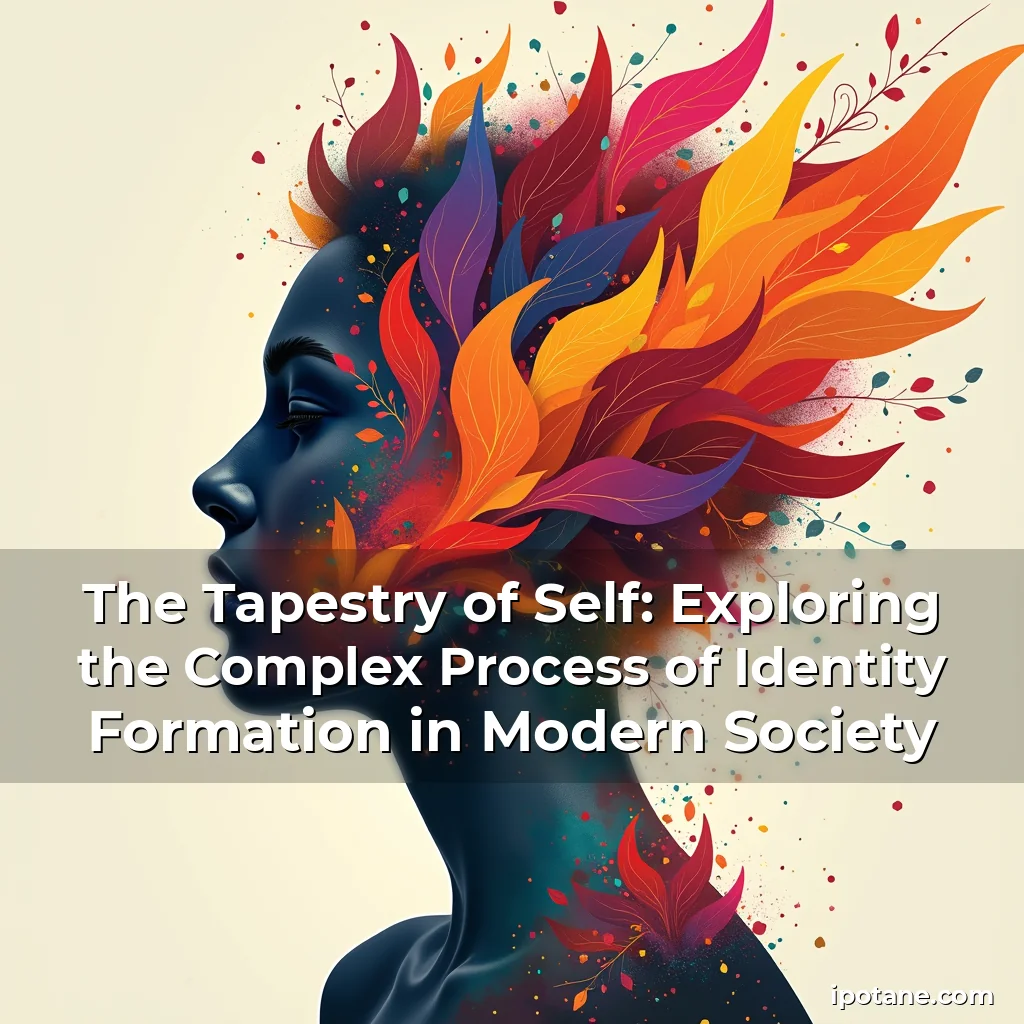
The Tapestry of Self: Exploring the Complex Process of Identity Formation in Modern Society
In an era defined by rapid technological advancements, cultural shifts, and evolving social norms, identity formation has become both a deeply personal journey and a collective societal challenge. For individuals navigating their sense of self within these dynamic environments, understanding how identities are shaped is essential.
This exploration delves into the multifaceted nature of identity development, examining its psychological underpinnings, sociocultural influences, and contemporary challenges faced by modern individuals seeking authenticity in a world that constantly reshapes itself through digital interactions and global connectivity.
The Psychological Foundations of Identity Development
At the core of identity formation lies a complex interplay between innate characteristics and environmental influences. Psychologists have long studied how personality traits, cognitive abilities, and emotional responses contribute to the way individuals perceive themselves and interact with others.
Erik Erikson’s theory of psychosocial development remains foundational in understanding identity formation across different life stages. His eight-stage model highlights critical junctures where individuals confront existential crises that shape their worldview and self-concept.
For instance, during adolescence, individuals grapple with the conflict between autonomy and connection, searching for a balance between asserting independence and maintaining relationships with family and peers. This struggle often leads to experimentation with various roles and affiliations as part of self-discovery.
Modern research also emphasizes the role of neuroplasticity in shaping identity. Studies show that repeated experiences can alter brain structure over time, influencing how people process information, regulate emotions, and make decisions related to their self-perception.
- Biological factors: Genetic predispositions influence temperament, which forms the baseline for personality development and interaction styles.
- Cognitive maturation: As individuals develop higher-order thinking skills, they gain greater capacity for introspection and self-reflection, crucial components of identity construction.
- Emotional regulation: Mastery of emotional control allows individuals to navigate social situations effectively while staying true to their authentic selves.
These psychological mechanisms work together to create a framework upon which cultural and social elements build, ultimately shaping each person’s unique identity profile.
Societal Influences on Identity Construction
Society plays a pivotal role in molding individual identities through shared values, traditions, and expectations. From childhood onwards, individuals absorb cultural narratives that define acceptable behaviors, beliefs, and aspirations.
Families serve as primary agents of socialization, transmitting values from one generation to another. Through daily interactions, children learn what is considered right or wrong, appropriate or inappropriate based on familial norms.
However, the influence of peer groups becomes increasingly significant during adolescence. Peer pressure often drives conformity to group standards, sometimes at odds with personal preferences or intrinsic values.
Media consumption further complicates identity formation by presenting idealized images of success, beauty, and lifestyle choices that may not align with reality but still exert considerable influence on self-image and goals.
Additionally, institutions such as schools and workplaces reinforce certain behavioral patterns through reward systems and disciplinary measures, subtly guiding individuals toward socially accepted roles and responsibilities.
The intersection of globalization and technology introduces new layers of complexity, exposing individuals to diverse cultures simultaneously and challenging traditional notions of belonging and identification.
Cultural Contexts Shaping Personal Identities
Different cultures approach identity formation in distinct ways, reflecting historical legacies, religious beliefs, and political structures. In collectivist societies, for example, personal identity is closely tied to communal obligations and relational bonds.
In contrast, individualist cultures emphasize self-reliance and personal achievement as markers of identity. These differing paradigms affect everything from career aspirations to interpersonal relationships and moral decision-making processes.
Multicultural societies present additional dimensions to identity formation, requiring individuals to negotiate multiple cultural frameworks simultaneously. This phenomenon is particularly evident among second-generation immigrants who straddle two worlds without fully belonging to either.
Religious affiliation also significantly impacts identity development, providing communities of support while imposing specific ethical guidelines and practices that shape behavior and belief systems.
Linguistic diversity adds yet another layer to this intricate web of influences. Language not only serves as a means of communication but also carries embedded meanings, idioms, and value judgments that reflect broader cultural perspectives.
Celebrating cultural heritage while adapting to dominant societal norms creates ongoing tensions that many individuals experience throughout their lives, especially when confronted with stereotypes or discrimination rooted in cultural misunderstandings.
Navigating Digital Spaces and Online Personas
The rise of social media platforms has revolutionized how people construct and express their identities online. Virtual spaces allow individuals unprecedented freedom to curate personas tailored to specific audiences or interests.
While this offers opportunities for self-expression, it also raises concerns about authenticity. Many users engage in strategic self-presentation aimed at gaining approval rather than revealing genuine aspects of themselves.
The concept of “digital dualism” describes the separation between offline and online identities, highlighting the potential disconnect between how individuals portray themselves digitally versus how they behave in real-world settings.
Moreover, algorithmic curation affects visibility and engagement, leading some individuals to conform to platform-specific trends even when those trends contradict their actual views or experiences.
Privacy considerations add another dimension to this issue. With increasing data collection by tech companies, there is growing concern about whether our digital footprints accurately represent who we truly are or merely reflect curated versions designed for public display.
Despite these complexities, virtual communities provide safe spaces for marginalized groups to explore identities freely away from judgmental eyes found in physical environments.
Challenges in Contemporary Identity Formation
Today’s youth face unique obstacles in forming coherent identities due to competing demands from education, employment, and social obligations. Academic pressures often dictate career paths before students have had sufficient time to discover their passions or aptitudes.
Workplace culture increasingly prioritizes productivity metrics over holistic well-being, potentially stifling creative expression and personal growth necessary for healthy identity development.
Socioeconomic disparities exacerbate these issues by limiting access to resources that facilitate meaningful exploration of identity options, including quality education, mentorship programs, and supportive social networks.
Rising mental health awareness brings attention to conditions like impostor syndrome and chronic indecision that can hinder confident identity establishment among young adults trying to find direction amidst uncertainty.
Environmental changes caused by climate change introduce new anxieties affecting future-oriented thinking and goal-setting capabilities, adding another layer of complexity to identity negotiation processes.
Political polarization increases stress around defining oneself politically or ideologically, forcing individuals to choose sides prematurely without full comprehension of underlying ideologies or implications.
Strategies for Healthy Identity Development
Cultivating a strong sense of self requires intentional effort involving reflection, experimentation, and resilience against external pressures. Engaging in activities that promote self-awareness helps uncover hidden strengths and areas needing improvement.
Journaling emerges as a powerful tool for tracking thought patterns, identifying recurring themes, and recognizing moments when internal consistency was achieved versus times when compromise occurred due to external influences.
Pursuing hobbies outside mainstream interests encourages exploration beyond conventional pathways towards discovering alternative expressions of self that might otherwise remain undiscovered.
Seeking out mentors or role models whose journeys resonate personally provides guidance without enforcing rigid templates; instead, it inspires adaptation grounded in lived experience rather than prescriptive advice.
Practicing mindfulness techniques enhances presence during critical decision points, allowing clearer assessment of motivations behind choices made regarding appearance, profession, relationship dynamics, etc.
Building inclusive communities fosters acceptance of diverse identity manifestations, reducing stigma associated with nonconformity and encouraging authenticity regardless of perceived normalcy according to prevailing standards.
Conclusion
Identity formation is neither linear nor static but rather an ever-evolving process influenced by myriad factors spanning biology, psychology, sociology, and technology.
Recognizing the multidimensionality of this endeavor empowers individuals to embrace their developmental journeys openly, confidently navigating transitions while remaining attuned to emerging possibilities that continue shaping who they will become tomorrow.

news is a contributor at ipotane. We are committed to providing well-researched, accurate, and valuable content to our readers.