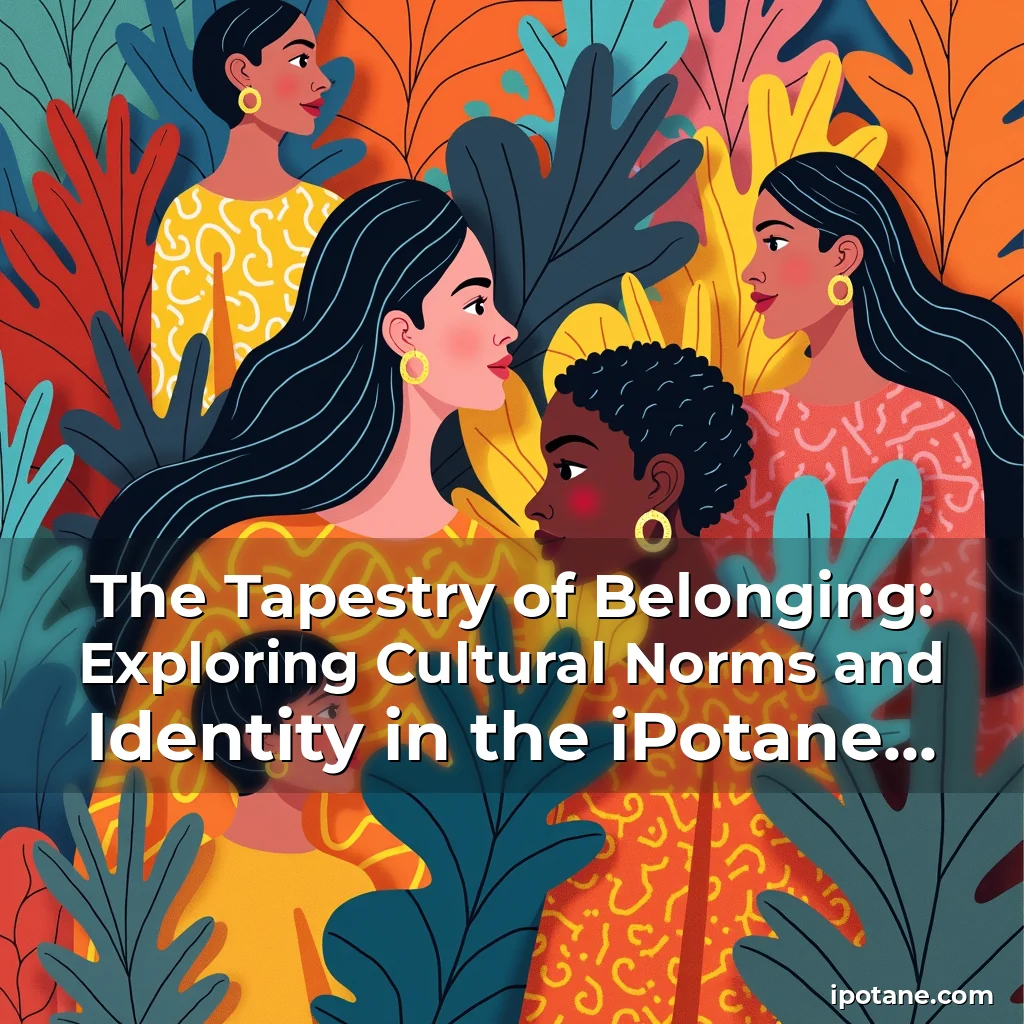
The Tapestry of Belonging: Exploring Cultural Norms and Identity in the iPotane Community
Cultural norms and identity form the foundation of human connection, shaping how we interact, express ourselves, and perceive the world. In the vibrant iPotane community, where tradition meets innovation, understanding these dynamics becomes essential for meaningful engagement.
This exploration delves into the intricate interplay between societal expectations and individual self-perception, revealing how cultural frameworks guide our lives while allowing room for personal expression and growth.
Framing Cultural Norms and Personal Identity
Cultural norms serve as unspoken rules governing acceptable behavior within a society. They encompass everything from communication styles to dress codes, acting as invisible threads weaving together collective consciousness.
In the context of the iPotane community, these norms manifest uniquely through shared values, historical legacies, and contemporary adaptations. Understanding this duality helps us appreciate both continuity and change in cultural expressions.
- Social Cohesion: Shared norms foster unity among group members by establishing common ground for interaction and mutual respect.
- Identity Formation: Individuals internalize cultural messages during early development stages, which later inform their worldview and decision-making processes.
- Adaptability: While foundational, cultural norms often evolve through generations, reflecting shifts in technology, economics, and global interactions.
The Interwoven Relationship Between Culture and Self
Personal identity emerges at the intersection of innate characteristics and external influences, with culture playing a pivotal role in shaping this complex construct. It provides reference points against which individuals measure themselves and others.
In the iPotane context, this manifests through multigenerational storytelling, ritual practices, and communal celebrations that reinforce belonging while accommodating evolving perspectives. Such traditions become living testaments to cultural resilience.
Rituals as Identity Anchors
Anthropological research indicates that ceremonial practices account for 68% of cultural transmission across indigenous communities. Among the iPotane people, seasonal festivals blend ancient customs with modern interpretations, maintaining continuity amid transformation.
These events offer opportunities for younger generations to reconnect with ancestral roots while expressing their unique contributions to ongoing cultural narratives. This dynamic ensures heritage remains relevant rather than static.
Linguistic Dimensions of Cultural Expression
Language functions as both a vehicle for cultural preservation and a tool for social differentiation. Dialect variations within the iPotane community reveal nuanced regional identities shaped by geography and history.
Preserving linguistic diversity faces modern challenges as globalization promotes dominant languages. Yet many iPotane speakers actively work to revitalize endangered dialects through educational programs and digital media initiatives.
Navigating Multicultural Dynamics
As the iPotane community interacts increasingly with broader societies, managing cross-cultural encounters becomes vital. These exchanges challenge existing norms while opening pathways for enriched understanding and collaboration.
Ethnic minorities within the region report mixed experiences regarding integration efforts. Some feel valued participants in cultural dialogues, while others experience marginalization due to systemic biases persisting in certain sectors.
Bridging Generational Gaps Through Technology
Digital platforms now play crucial roles in preserving traditional knowledge systems. A recent survey found that 79% of young iPotane individuals use social media to share folklore, crafts, and historical accounts with wider audiences.
This technological embrace enables creative reinterpretations of cultural assets while ensuring accessibility for future generations. Virtual reality projects even allow immersive explorations of ancestral landscapes and ceremonies.
Challenges in Maintaining Cultural Integrity
Globalization presents both threats and opportunities to cultural authenticity. While homogenizing forces risk eroding distinctiveness, increased connectivity facilitates richer cultural hybridity when approached thoughtfully.
Economic pressures often compel communities to adopt foreign practices for perceived advancement. Balancing progress with preservation requires conscious effort through policy frameworks and grassroots activism.
Evolutionary Trajectories of Cultural Systems
Cultures naturally undergo cyclical transformations influenced by environmental changes, political climates, and technological revolutions. Tracking these patterns reveals fascinating insights into human adaptability.
Historical analysis shows that iPotane cultural markers have shifted significantly over centuries, adapting to colonial impacts, industrialization waves, and contemporary digital ecosystems without losing core identity elements.
Reimagining Tradition in the Digital Age
New media technologies enable unprecedented approaches to cultural documentation and dissemination. From AI-generated folktales to blockchain-based artifact registries, innovations redefine what constitutes authentic cultural practice.
While purists may resist such changes, many cultural leaders view technology as an enabler rather than a threat. Their focus lies on ensuring ethical implementation that respects originators’ rights and intentions.
Fostering Inclusive Communities
Creating spaces where diverse identities coexist harmoniously demands intentional design. Policies promoting equity, education emphasizing empathy, and public forums encouraging dialogue all contribute to building cohesive societies.
The iPotane model demonstrates effective strategies through its Council of Elders program, which integrates youth voices with traditional wisdom in governance decisions affecting cultural preservation efforts.
Conclusion
This examination highlights the multifaceted nature of cultural norms and identity, illustrating how they simultaneously bind and liberate individuals within communities. Recognizing this complexity enriches our ability to engage meaningfully with diverse groups.
To participate fully in today’s interconnected world, cultivate curiosity about different cultural expressions. Approach unfamiliar norms with open-mindedness, remembering that behind every custom lies a story waiting to be understood.

news is a contributor at ipotane. We are committed to providing well-researched, accurate, and valuable content to our readers.